
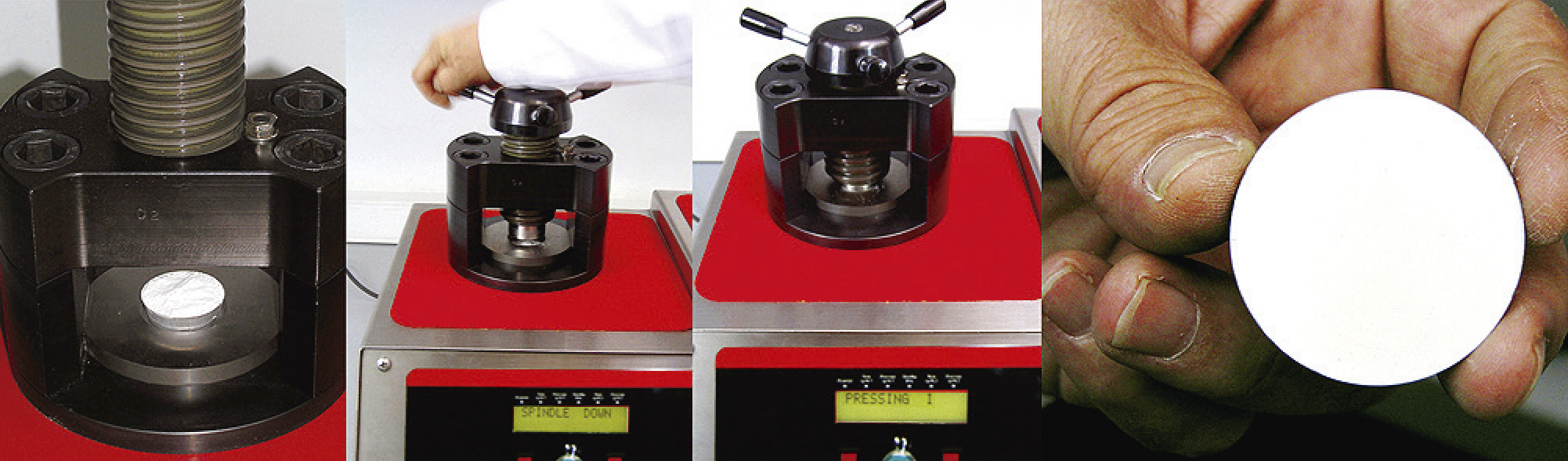
The Pellet Press Machine is a reliable and efficient solution for laboratory sample preparation, designed to convert powdered materials into uniform, high-density pellets. It ensures consistent pressure application, making it ideal for analytical techniques such as XRF, IR spectroscopy, and elemental analysis.
Engineered for durability and ease of use, the pellet press machine minimizes sample loss while improving repeatability and accuracy. Whether used in research laboratories, quality control facilities, or industrial testing environments, it delivers dependable performance with every press.


What is a pellet press machine used for?
A pellet press machine is used to compress powdered samples into solid pellets for laboratory analysis such as XRF, IR, and elemental testing.
Is a pellet press machine suitable for laboratory use?
Yes, laboratory pellet press machines are specifically designed for precise, repeatable, and contamination-free sample preparation.
What materials can be processed using a pellet press machine?
Powders such as minerals, cement, coal, chemicals, and other fine-grain materials can be pelletized efficiently.
What is the difference between hydraulic and manual pellet presses?
Hydraulic pellet presses provide higher pressure, better consistency, and reduced operator effort compared to manual presses.
Why is pellet preparation important in analysis?
Proper pellet preparation ensures accurate, repeatable analytical results and minimizes sample variability.
To obtain truly representative results in RX or LIBS , the samples
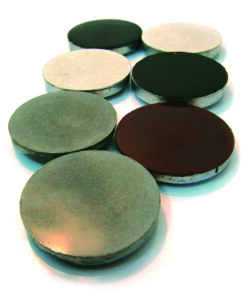
require a preparation of an excellent finish – very flat surfaces, regular and without cracks -. Therefore, the manufacturing of the disks must guarantee a high degree of cohesion and stability. The EQP-100 Press is
specially designed to obtain the best results when making the pellets. Of robust and durable design, it has got a simple working system and is really effective, and it is the only one in the market offering up to five
working programs in single or double cycle.
. 


This capacity allows us to program the EQP-100
Press to apply pressure up to two times in a same process, granting the possibility of digitally
regulate the time and the pressure, and the time elapsed between each pressing cycle. This time
is necessary, in some cases, for the sample to expel occluded gases – this gases are generally
the causes of irregularities or cracks in the disks -. This capacity makes of this unit the optimum
alternative in the case of difficult samples.
The EQP-100 Press has been specially designed for the preparation of dust samples (pellets) that
are to be analyzed afterwards by RX. The preparation of pellets is a common technique which
will allow us to manipulate the samples easily and obtain reproducible analytical results.
A unit easy to use, quick – as part of the process is automated -, robust and effective.
Applications
glass, earths, cement, plaster, ceramic
materials, minerals, silicates, geological
and mineralogical samples.




Leave A Comment